

Boutique Clothing E-Commerce & Smart Inventory Management System

1. Executive Overview: Boutique Clothing E-Commerce & Smart Inventory Ecosystem
The modern apparel and fashion retail market demands an agile, omnichannel technology architecture that seamlessly connects digital customer storefronts with back-office inventory logistics and physical point-of-sale (POS) terminals. The Boutique Clothing E-Commerce & Smart Inventory Management System is an enterprise software product engineered specifically for fashion houses, designer apparel brands, multi-location clothing boutiques, and online garment retailers operating in competitive domestic and global markets including India, North America, Europe, and the Middle East. Built on a modular PHP 8.2+ architecture backed by relational MySQL database indexing, this platform unifies visual product merchandising, multi-warehouse inventory tracking, customer relationship management (CRM), and automated shipping logistics into a high-performance web solution.
Unlike generic off-the-shelf SaaS e-commerce platforms that charge compounding per-transaction fees and lock merchant data within proprietary ecosystems, our Enterprise Software License delivers 100% source code ownership. Fashion brand owners gain complete data sovereignty, allowing self-hosting on private AWS, Google Cloud, Microsoft Azure, or bare-metal Linux servers. This eliminates recurring SaaS commission overheads while ensuring compliance with global privacy regulations including GDPR and India's DPDP Act.
The system handles complex garment catalog attributes natively. Apparel items require intricate multi-dimensional variations including color swatches, size matrices (XS through 5XL, numeric sizing, custom waist measurements), fabric material compositions, care instructions, and seasonal collection tags. The database schema accommodates unlimited variant combinations per master SKU without compromising search indexing velocity or page load speeds.
2. Storefront Experience, Visual Merchandising & Conversion Optimization
Delivering an engaging shopping experience is paramount for apparel conversion rates. The digital storefront features a high-definition visual merchandising engine with responsive image galleries, interactive zoom lenses, 360-degree product view support, and real-time color swatch switching. Shoppers can view items styled on models across varied sizes, read verified buyer reviews, and access dynamic size fit calculators that recommend optimal garments based on customer body dimensions.

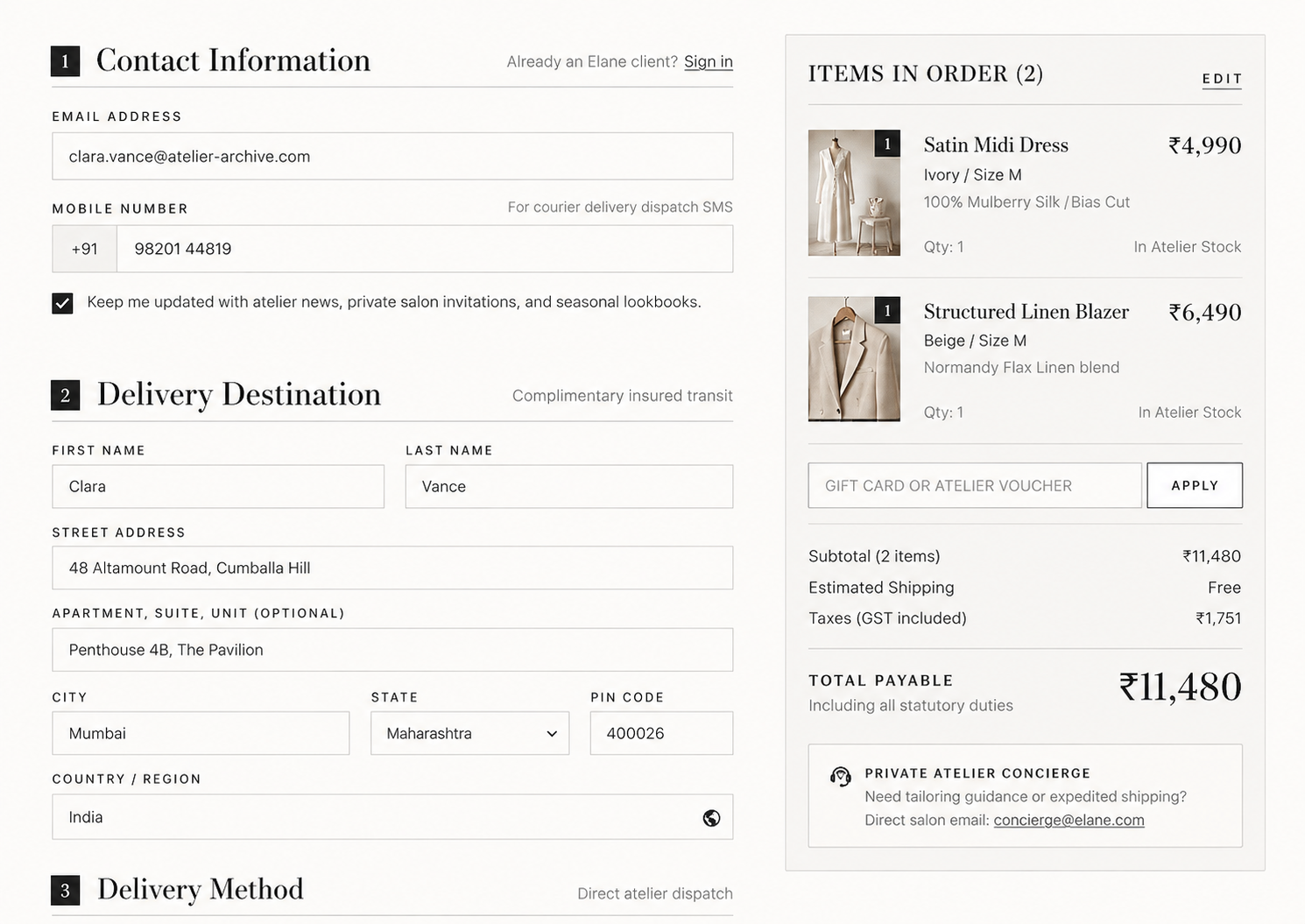
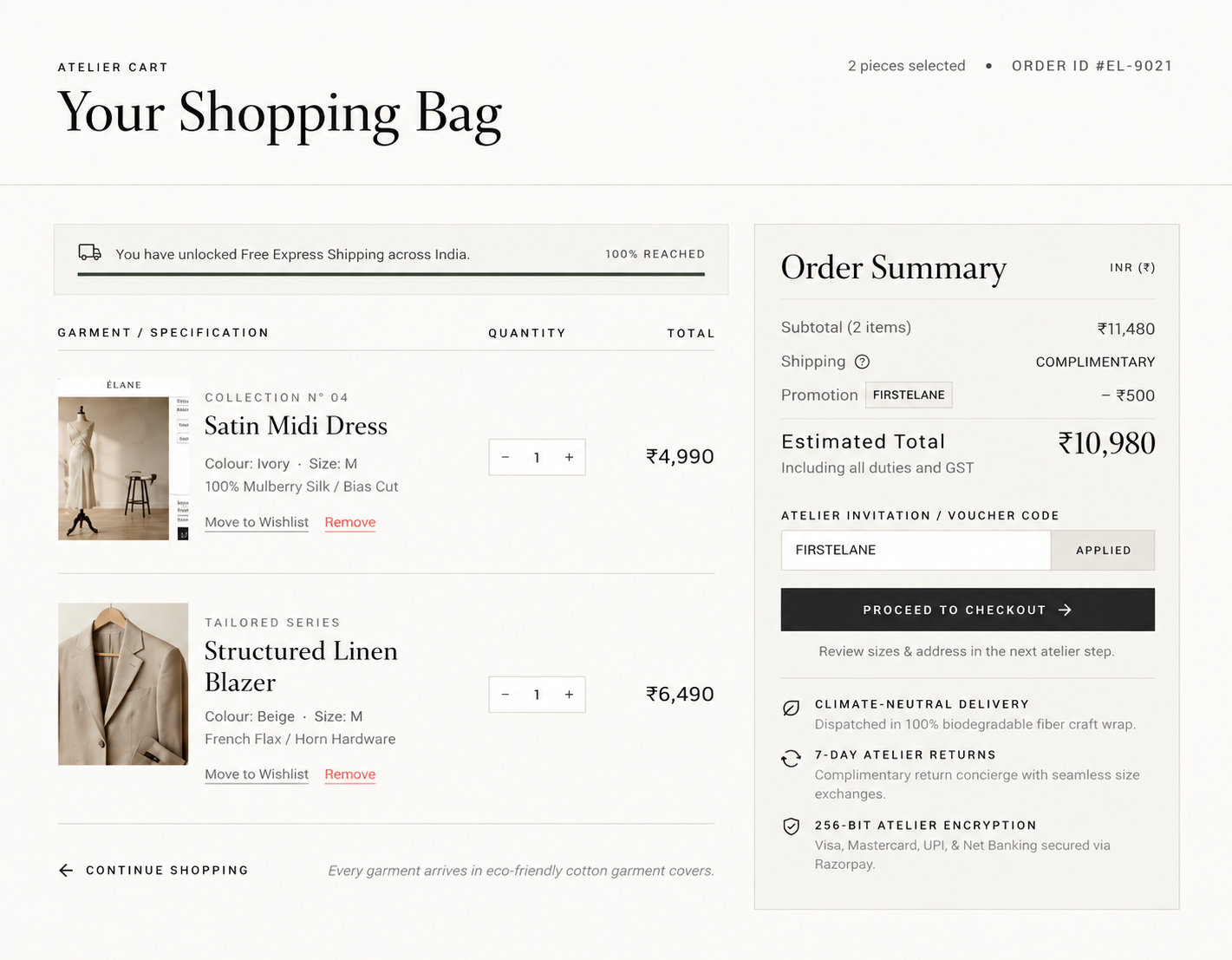
The shopping cart and checkout pipeline are optimized to minimize cart abandonment. Features include instant slide-out cart drawers, sticky purchase bars on mobile viewports, automated coupon code validation, local currency auto-detection, and one-click guest checkout. Built-in wishlists allow shoppers to curate personal wardrobes, receiving automated email or WhatsApp price-drop alerts when items in their saved wishlist go on sale.
3. Multi-Warehouse Inventory Matrix & Omnichannel Synchronization
Managing apparel inventory across multiple physical boutiques, e-commerce web stores, and regional fulfillment warehouses presents significant operational challenges. The Smart Inventory Management Engine solves stock fragmentation by maintaining a unified real-time stock ledger across all sales channels. When an item is purchased at a physical boutique POS counter or ordered online, inventory counts update instantly across all connected endpoints in under 50 milliseconds.
Warehouse personnel manage stock movements using integrated barcode scanning tools and automated pick-pack-ship workflows. The system automatically calculates safety stock thresholds based on historical sales velocity, triggering automated purchase orders (PO) to apparel manufacturers when inventory levels approach reorder points. Inter-warehouse transfer manifests allow managers to reallocate stock between physical boutique locations based on regional demand signals.
4. Point-of-Sale (POS) & Multi-Store Physical Counter Operations
For retailers with physical brick-and-mortar stores, the platform includes a cloud-synchronized Point-of-Sale (POS) web interface designed for tablet and desktop touchscreen terminals. Store staff can look up customer purchase histories, scan garment barcodes, apply store credit or promotional discounts, and process split payments using cash, credit card, and instant UPI QR codes.
The POS terminal features offline caching capability, ensuring uninterrupted checkout operations even during temporary internet outages. Transaction logs automatically synchronize with the central database once internet connectivity is restored, maintaining accurate financial ledgers and stock counts across all boutique branches.
5. Order Fulfillment, Automated Courier APIs & Tax Compliance
Order fulfillment workflows automate courier allocation based on delivery speed, shipping cost, and destination postal codes. The platform features pre-built integrations with major logistics networks including Shiprocket, Delhivery, BlueDart, FedEx, DHL, and UPS. Automated shipping label generation, pick manifest printing, and tracking URL dispatches occur automatically upon order status updates.

Tax management is built directly into the transaction engine. For transactions within India, the system dynamically applies Goods and Services Tax (GST 5% / 12% for apparel based on price thresholds), generates HSN-coded tax invoices, and formats state-wise tax liability summaries. For international orders, the system calculates local VAT/sales tax under Delivered Duty Paid (DDP) guidelines, issuing multi-currency digital receipts.
6. Customer CRM, Loyalty Tiers & Marketing Automation
Sustaining high customer lifetime value (LTV) requires personalized marketing and rewards programs. The built-in CRM tracks individual customer purchase frequencies, average order values, preferred product categories, and size profiles. Retailers can segment customers into VIP tiers, offering exclusive early access to new seasonal collections or automated birthday discount codes.

Automated marketing workflows trigger targeted notifications via Email, SMS, and WhatsApp API. Pre-configured flows include abandoned cart recovery sequences with single-use discount links, post-purchase order tracking updates, garment care tips, and review request invitations, driving repeat purchases without manual marketing intervention.
7. Financial Reporting, Profit Margin Analytics & ERP Integrations
Executive leadership receives real-time financial transparency through interactive analytical dashboards. Key performance indicators (KPIs) visualize Gross Merchandise Value (GMV), net profit margins per product line, customer acquisition costs (CAC), return rates by garment category, and deadstock velocity metrics.
Accounting integration modules export general ledger data directly into accounting software systems including Tally Prime, QuickBooks, and Zoho Books. Detailed cost-of-goods-sold (COGS) reporting helps merchandise planners optimize inventory purchasing budgets and maximize gross profit margins across every apparel line.
8. Technical Architecture, Security & RESTful API Specifications
The backend codebase is structured following modern Object-Oriented PHP 8.2+ standards with strict MVC separation, prepared PDO statements for complete SQL injection protection, and CSRF token validation across all form handlers. Database transactions utilize InnoDB storage engines with strict foreign key constraints to guarantee data integrity across high-concurrency order spikes.
Extensibility is provided via a comprehensive RESTful JSON API suite documented with OpenAPI (Swagger) specifications. External mobile apps, custom ERP tools, and third-party marketplace channels (Amazon, Myntra, Nykaa, Flipkart) can synchronize inventory, orders, and customer records securely using OAuth 2.0 bearer token authentication.
- Deployment Cloud / On-Premise
- Tax Compliance GST & Global DDP
- Source Code Full IP Ownership
Product Visual Showcase